Education
The Department of Education is the Government body responsible for the administration and supervision of the Philippines education system.PRIMARY EDUCATION
• Compulsory
• Six years in duration
o 4 year primary cycle
o 2 year intermediate cycle.
Primary Cycle
Duration: Four years (grades I – IV, age 7 to 11).
Intermediate Cycle
Duration: Two years (grades V – VI, age 11 to 13).
• In grades I & II
o Medium of instruction is generally in the local dialect
o English and Filipino taught as second languages
• From grade III onwards
o Mathematics and Science are taught in English
o Social sciences and Humanities taught in Filipino
Children begin first grade at the age of 7. Promotion is granted annually from one grade to the next provided that students meet the achievement standards set for the grade. Promotion is based on a cumulative rating system. After satisfactorily completing the six-year elementary curriculum, students receive a certificate of graduation from the elementary school. No examination is required for admission to public secondary schools. The Certificate of Graduation is awarded to students who complete six years of primary education.
SECONDARY EDUCATION
Duration: Four years (grades VII – X, age 13 to 17)
Three main types
• General secondary school
o Attended by 90% of the student body
• Vocational secondary school
o Heavier focus in vocational training and practical arts
• Science secondary schools
o Students who have demonstrated a particular gift in science at the primary level
Admission is automatic for those who have completed six years of primary school. Promotion from one grade to the next is the same as that in the Primary Education system. If a student fails to get a final rating of no less than 75% in a particular subject he will need to repeat the subject the following year albeit he will be promoted. Students usually receive a Diploma (Katibayan) from their high school upon completing their 4 years of Secondary Education. In addition, they are awarded the secondary school Certificate of Graduation (Katunayan) by the Department of Education. Students are then issued a Form 137-A which lists out all classes they have taken and the grades they earned.
TERTIARY EDUCATION
• Higher Education
• University Higher Education
o Bachelor’s
o Master of Art/Science
o Doctor of Philosophy
• Non-University Higher Education
o Programs that lead to Certificate of Proficiency or a Diploma
• Teacher Education
o 4 years in length
o Bachelor’s degree in elementary education (B.E.Ed)
o Bachelor’s degree in secondary education (B.S.Ed)
In Summary:

cockfighting

Though “sabong” – cockfighting – is illegal in many countries, it is not so in Philippines. In fact, it is a favourite pastime amongst them and can be considered a national sport. This is because anybody can participate in it as it is not expensive to acquire an eligible cock. Moreover it is a lucrative sport as winning a match earns the owner money from the bets placed by spectators. Furthermore, cockfighting in Philippines is unique with it being far more brutal and bloody because it only ends in death or bloody flight of the losing cock hence attracting more interest. Sharp razors are attached to the cock’s feet when fighting and adjusted to get the maximum impact with minimal movement. This Filipino sport has since generated interest internationally with American, Japanese etc breeders coming to Philippines to take part in competitions.
Basic Info
PHILIPPINES
- 7 major islands - Manila (Capital). Luzon. Mindoro. Samar. Negros. Mindanao
- 7,100 minor islands
Population: 91, 983, 102 (2009)
Area: 300, 000 sq km (Nov 2010) - 72th largest in the world!
Independance Day: 12 July 1898 (1898 - 1946, 1964-NOW)
4 July 1946 (1946-1964)
The reason for this was that the United States did not recognize the initial declaration until the Republic Act No. 4166.
Philippines is said to have lived 4 centuries in a convent and half a century in Hollywood.
This is because the Spanish came and stayed in 1565 until 1989 when Americans came.
Area: 300, 000 sq km (Nov 2010) - 72th largest in the world!
Independance Day: 12 July 1898 (1898 - 1946, 1964-NOW)
4 July 1946 (1946-1964)
The reason for this was that the United States did not recognize the initial declaration until the Republic Act No. 4166.
Philippines is said to have lived 4 centuries in a convent and half a century in Hollywood.
This is because the Spanish came and stayed in 1565 until 1989 when Americans came.
Commodification of culture & tradition
Tourism has been a culprit to a large extent.
Let’s take a look at Baguio City for example. Tourists can now bring back to their homeland items as domestic as brooms bearing the name ‘Baguio City’ to remind them of the place. When they show friends what they brought back from their visit, those friends will unconsciously put a picture of a broom whenever thinking of Baguio City. In addition, when I went back to Philippines last 2006 for a visit, the mountainous area where the indigenous tribe can be found is now opened for public to roam freely. Many small enterprises have been set up as well selling their arts and crafts. I remember clearly a photo taking booth where you have to pay a small sum to put on their ethnic clothes and weapons, and take photos with the indigenous people. A way for them to earn income. Now traditional wear has been reduced to a form of interest for the tourists. If there were no tourists, such things would be kept to their proper uses and there would be no exploitation of traditions and cultures.
Another example is the Ati-Atihan Festival. As written by Roces, A. Roces, G. (2009), the festival has been so commercialized that it has attracted too many tourists to the extent that the festival is held on other than the original dates to accommodate the crowd. What I mean is that in addition to the one on the 3rd weekend of January to commemorate the arrival of Santo Niño, there would be smaller scale Ati-Atihan Festivals on later dates for those who missed out on the original, the main aim is to let tourists experience it instead. Therefore the tradition of the festival has been altered.
My last example would be cockfighting. A national sport shared amongst Filipino of different classes is now participated by people of different countries. Many of those people found out of this hobby whilst here in Philippines for leisure purposes hence tourism has indirectly played a part in commodifying the culture of the place.
Let’s take a look at Baguio City for example. Tourists can now bring back to their homeland items as domestic as brooms bearing the name ‘Baguio City’ to remind them of the place. When they show friends what they brought back from their visit, those friends will unconsciously put a picture of a broom whenever thinking of Baguio City. In addition, when I went back to Philippines last 2006 for a visit, the mountainous area where the indigenous tribe can be found is now opened for public to roam freely. Many small enterprises have been set up as well selling their arts and crafts. I remember clearly a photo taking booth where you have to pay a small sum to put on their ethnic clothes and weapons, and take photos with the indigenous people. A way for them to earn income. Now traditional wear has been reduced to a form of interest for the tourists. If there were no tourists, such things would be kept to their proper uses and there would be no exploitation of traditions and cultures.
Another example is the Ati-Atihan Festival. As written by Roces, A. Roces, G. (2009), the festival has been so commercialized that it has attracted too many tourists to the extent that the festival is held on other than the original dates to accommodate the crowd. What I mean is that in addition to the one on the 3rd weekend of January to commemorate the arrival of Santo Niño, there would be smaller scale Ati-Atihan Festivals on later dates for those who missed out on the original, the main aim is to let tourists experience it instead. Therefore the tradition of the festival has been altered.
My last example would be cockfighting. A national sport shared amongst Filipino of different classes is now participated by people of different countries. Many of those people found out of this hobby whilst here in Philippines for leisure purposes hence tourism has indirectly played a part in commodifying the culture of the place.
EFFECTS OF TOURISM GROWTH ON PHILIPPINES
The growth of tourism in any country would undoubtedly have its effects, be it good or bad. These effects can either be physical (infrastructure etc) or non physical(cultural loss etc). How it has affected Philippines? I shall discuss it in the following paragraphs.
INFRASTRUCTURE
There is a need to add in new infrastructure or renew current infrastructure to meet with the demands of the tourists is does not actually mean that tourists are getting more demanding but with a growth in tourism, certain current infrastructure just cannot support the sheer size of tourists. For example, the Terminal 2 of Ninoy Aquino International Airport (NAIA) was opened in 1999 in what I think is to lighten the load and ease the traffic in Terminal 1.
In addition the never ending projects for shopping malls and recreational facilities in a hope to increase tourism receipts. Or the plans to improve transportation such as new routes to shorten travelling time for tourists. It may or may not benefit the locals as there is always a probability for new infrastructure being white elephants. For example, Terminal 3 of NAIA has been partially built and abandoned since 2002.
LANGUAGES
With tourists flowing in from all over the world, Filipinos working in the Tourism Sector have to at least know a handful of key phrases to help them go about their work. They are after all the ones who first interact with the tourist. However if not supervised, the Filipino language might be diluted like some of the early languages of early settlers when the Spanish came.
TERRORIST ATTACKS
With Philippines being more globalised, its people's knowledge in warfare has also increased. In addition, terrorist groups such as the Moro Islamic Liberation Front (MILF) has managed to spread its teachings to Southern Philippines region. With the increase in tourism, such groups see a way to make its demands known to the government. For example, in 2008, 6 were killed in a bus bombing Digos City, Davao del Sur.
CONCLUSION
The growth in tourism generally has allowed Philippines to improve its standards of living (infrastructure improvements) and indirectly caused their people to be more educated (increased fluency in language). However, it also brings about unwanted attention from terrorists groups looking for a media thus affecting the peace in Philippines. In conclusion, tourism has not only changed the country at surface level but also at a deep level.
INFRASTRUCTURE
There is a need to add in new infrastructure or renew current infrastructure to meet with the demands of the tourists is does not actually mean that tourists are getting more demanding but with a growth in tourism, certain current infrastructure just cannot support the sheer size of tourists. For example, the Terminal 2 of Ninoy Aquino International Airport (NAIA) was opened in 1999 in what I think is to lighten the load and ease the traffic in Terminal 1.
In addition the never ending projects for shopping malls and recreational facilities in a hope to increase tourism receipts. Or the plans to improve transportation such as new routes to shorten travelling time for tourists. It may or may not benefit the locals as there is always a probability for new infrastructure being white elephants. For example, Terminal 3 of NAIA has been partially built and abandoned since 2002.
LANGUAGES
With tourists flowing in from all over the world, Filipinos working in the Tourism Sector have to at least know a handful of key phrases to help them go about their work. They are after all the ones who first interact with the tourist. However if not supervised, the Filipino language might be diluted like some of the early languages of early settlers when the Spanish came.
TERRORIST ATTACKS
With Philippines being more globalised, its people's knowledge in warfare has also increased. In addition, terrorist groups such as the Moro Islamic Liberation Front (MILF) has managed to spread its teachings to Southern Philippines region. With the increase in tourism, such groups see a way to make its demands known to the government. For example, in 2008, 6 were killed in a bus bombing Digos City, Davao del Sur.
CONCLUSION
The growth in tourism generally has allowed Philippines to improve its standards of living (infrastructure improvements) and indirectly caused their people to be more educated (increased fluency in language). However, it also brings about unwanted attention from terrorists groups looking for a media thus affecting the peace in Philippines. In conclusion, tourism has not only changed the country at surface level but also at a deep level.
FESTIVALS

Ati Atihan Dance Festival
Has anyone ever noticed how energetic Filipinos can get during Countdowns, Christmas Parties, Birthday Parties or just normal gatherings? Well it is in their blood to know how to party!
Ati-Atihan actually means “make-believe Atis’, Atis being the indigenious natives of the island before the arrival of the Malay in the 10th century and the Spanish in the 16th century.
Dubbed the Filipino version of Mardi Gras, this annual festival held in Panay, which is nearby the famous beach Boracay, lasts for a week starting from the 3rd weekend of January to honour the arrival of Santo Niño by Magellan to the native Queen of Cebu in 1521. Many towns in Panay hold their own Ati-Atihan Festival but the biggest would be in Kalibo. Everybody and anybody can participate, dance, beat on a drum or just take photos while in the middle of the tribal groups. The main highlight of the festival is the native dance competitions pitched to rhythmic and mesmerizing drumbeats that run continuously throughout whereby they are dressed in vibrant costumes. Competitors do it for local prestige or cash prizes.
Ati-Atihan actually means “make-believe Atis’, Atis being the indigenious natives of the island before the arrival of the Malay in the 10th century and the Spanish in the 16th century.
Dubbed the Filipino version of Mardi Gras, this annual festival held in Panay, which is nearby the famous beach Boracay, lasts for a week starting from the 3rd weekend of January to honour the arrival of Santo Niño by Magellan to the native Queen of Cebu in 1521. Many towns in Panay hold their own Ati-Atihan Festival but the biggest would be in Kalibo. Everybody and anybody can participate, dance, beat on a drum or just take photos while in the middle of the tribal groups. The main highlight of the festival is the native dance competitions pitched to rhythmic and mesmerizing drumbeats that run continuously throughout whereby they are dressed in vibrant costumes. Competitors do it for local prestige or cash prizes.
Philippines Disneyfied
For this I shall cite Baguio City, Philippines as a place of interest that has been affected by disneyization.
As Philippines has lived in "Hollywood" for approximately half a century when the Americans arrived in 1989, it is inevitable that the country be Westernised or Disneyfied as pointed out in the three dimensions.
THEMING

In the website www.gobaguio.com, it categorises the recreational side of Baguio into 5 sub groupings; Kiddie, Romantic, Cultural, Sporty and Party. This characterisation, especially in a top site that potential visitors go to, shows that it has already themed the city in a certain way. For example, under Party Baguio, it plainly boasts that '(they) also have bars with billiards, bars with all-night internet access, a ballroom sance hall and sing-along karaoke bars' which is obviously of western influences. As for Kiddie Baguio, they have a 'low tech' Disneyland for children entertainment such as a skating rink.
MERCHANDISING

When I went to Baguio City in 2006, one of my relatives bought for my father a tee shirt with the word 'BAGUIO' imprinted on it which is actually quite expected whenever one goes to a tourist hot spot. Even we have such tee shirts on sale with 'Singapore' on it at places like Chinatown and Bugis Street. However it doesn't change the fact that what was once a place of an indigenous tribe evolved into a recreational and rest area for the US Army based there and further evolved into a tourist hotspot. Many souveneir shops there have there goods branded with the city's name. Even brooms! As written here, wooden Baguio Brooms called Walis Tambo often bears 'Baguio City' on the handle.
PERFORMATIVE LABOUR
Easter Weaving Room
This Easter Weaving Room has been established since 1909 and is actually a room is an Easter School which teaches the young women of Cordilleras to weave items to sell and make a living. Initially only meant for educational purposes, this room is now open to visitors to watch the process of traditional cloth weaving where items weaved up for sale to them.
In my opinion this is a form of performative labour as what was initially a mean of income through solely weaving items, the process itself is now a source of income as it has become a performance for visitors to view.
In conclusion, based on these three fundamental dimensions, Philippines has been subjected to Disneyization, or at least Baguio City is.
As Philippines has lived in "Hollywood" for approximately half a century when the Americans arrived in 1989, it is inevitable that the country be Westernised or Disneyfied as pointed out in the three dimensions.
THEMING

MERCHANDISING

When I went to Baguio City in 2006, one of my relatives bought for my father a tee shirt with the word 'BAGUIO' imprinted on it which is actually quite expected whenever one goes to a tourist hot spot. Even we have such tee shirts on sale with 'Singapore' on it at places like Chinatown and Bugis Street. However it doesn't change the fact that what was once a place of an indigenous tribe evolved into a recreational and rest area for the US Army based there and further evolved into a tourist hotspot. Many souveneir shops there have there goods branded with the city's name. Even brooms! As written here, wooden Baguio Brooms called Walis Tambo often bears 'Baguio City' on the handle.
PERFORMATIVE LABOUR
This Easter Weaving Room has been established since 1909 and is actually a room is an Easter School which teaches the young women of Cordilleras to weave items to sell and make a living. Initially only meant for educational purposes, this room is now open to visitors to watch the process of traditional cloth weaving where items weaved up for sale to them.
In my opinion this is a form of performative labour as what was initially a mean of income through solely weaving items, the process itself is now a source of income as it has become a performance for visitors to view.
In conclusion, based on these three fundamental dimensions, Philippines has been subjected to Disneyization, or at least Baguio City is.
MY REFLECTION
The following would be my personal opinion on said topics;LEISURE PROGRAMMES

Filipinos indulge in many different programmes to entertain themselves. Be it parties, festivals, cock fighting, karaoke etc
TRADITIONS
Each country, bloodline, family has its own traditions. Philippines is no different. The following are a few.
COURTSHIP
Courtship can be a be headache for them. It doesn't matter if the Filipina fancies or does not fancy her suitor as she would naturally reject the suitor's offer to date for a few times before she accept if she does. Filipinas naturally play hard to get.
It becomes a headache when the male has to figure out whether the female really does not like him or is just playing hard to get.
It becomes a headache for the female when the male does not get the message that she does not fancy him.
In addition to that burden of confusion, it is customary but optional for the boy to obtain the girl's parents' approval even before he actually begins formal courtship. This is done through house-calling or umaakyat ng bahay. This is to allow strong family participation because in a Filipino marriage, families of both sides develop ties. Once the boy proposes and is accepted, his parents pay a call on the girl's parents to discuss wedding plans. Wedding expenses are paid for by the groom's parents. They are formally engaged only when a ring is given. Then a dinner called despedida de soltera (farewell to maidenhood) is given by the girl's parents.
Or if families disapprove of the marriage, they can always elope.
CIRCUMCISION
It is not compulsory for a Filipino boy to get circumcised upon reaching puberty as there is no religious significance nor is it a family ritual. The boy goes with a friend without the family knowing. Others only know about it through word of mouth not by publicising it.
FUNERALS
Traditionally when someone passes away, the immediate family members would don mourning clothes;
Immediate family members would wear black
Widow and immediate family female members tops it with a black veil
Other men would wear dark trousers and a white shirt with a black armband
However for immediate family members, mourning clothes are traditionally worn every day up until the first anniversary for the death or babang luksa. Babang luksa is a ceremony signifying the first anniversary of the death. However in modern times, mourning clothes are worn only for a decent period after the death, usually after nine days of prayer or novena is held after the burial.
COURTSHIP
Courtship can be a be headache for them. It doesn't matter if the Filipina fancies or does not fancy her suitor as she would naturally reject the suitor's offer to date for a few times before she accept if she does. Filipinas naturally play hard to get.
It becomes a headache when the male has to figure out whether the female really does not like him or is just playing hard to get.
It becomes a headache for the female when the male does not get the message that she does not fancy him.
In addition to that burden of confusion, it is customary but optional for the boy to obtain the girl's parents' approval even before he actually begins formal courtship. This is done through house-calling or umaakyat ng bahay. This is to allow strong family participation because in a Filipino marriage, families of both sides develop ties. Once the boy proposes and is accepted, his parents pay a call on the girl's parents to discuss wedding plans. Wedding expenses are paid for by the groom's parents. They are formally engaged only when a ring is given. Then a dinner called despedida de soltera (farewell to maidenhood) is given by the girl's parents.
Or if families disapprove of the marriage, they can always elope.
CIRCUMCISION
It is not compulsory for a Filipino boy to get circumcised upon reaching puberty as there is no religious significance nor is it a family ritual. The boy goes with a friend without the family knowing. Others only know about it through word of mouth not by publicising it.
FUNERALS
Traditionally when someone passes away, the immediate family members would don mourning clothes;
Immediate family members would wear black
Widow and immediate family female members tops it with a black veil
Other men would wear dark trousers and a white shirt with a black armband
However for immediate family members, mourning clothes are traditionally worn every day up until the first anniversary for the death or babang luksa. Babang luksa is a ceremony signifying the first anniversary of the death. However in modern times, mourning clothes are worn only for a decent period after the death, usually after nine days of prayer or novena is held after the burial.
CULTURES
HIYA
The Flilipino culture in my opinion, centers around Filipinos prioritize social values, the most important being hiya. Hiya is to basically know shame. It is reinforced by the spanish term amor-propio. Hiya is important as with it, one can gain acceptance in the community. It is so important that for example, no matter how useless I find a worker, I will never tell him straight but beat around the bush, tell him indirectly or use euphemism. You will rarely hear a straight 'No' from a Filipino. More like you would hear siguro nga (maybe) or bahala na (see how it goes).
The disadvantage is that some people never get the hint. As such, many a times an intermediary is engaged to break bad news. This is to avoid someone else losing hiya as to do so would be to invite conflict hence the intermediary.
In a family, the intermediary for the children and the parents is usually the grandparents since it is common for nuclear families.
In a workplace, the boss would engage the employee's coworker to talk to employee for the boss. However, this might cause misunderstanding if information is relayed incorrectly.
The Flilipino culture in my opinion, centers around Filipinos prioritize social values, the most important being hiya. Hiya is to basically know shame. It is reinforced by the spanish term amor-propio. Hiya is important as with it, one can gain acceptance in the community. It is so important that for example, no matter how useless I find a worker, I will never tell him straight but beat around the bush, tell him indirectly or use euphemism. You will rarely hear a straight 'No' from a Filipino. More like you would hear siguro nga (maybe) or bahala na (see how it goes).
The disadvantage is that some people never get the hint. As such, many a times an intermediary is engaged to break bad news. This is to avoid someone else losing hiya as to do so would be to invite conflict hence the intermediary.
In a family, the intermediary for the children and the parents is usually the grandparents since it is common for nuclear families.
In a workplace, the boss would engage the employee's coworker to talk to employee for the boss. However, this might cause misunderstanding if information is relayed incorrectly.
LANGUAGES
Due to the many influences, Philippines is a country of many dialects and languages.

TAGALOG
However its main language Tagalog is part of the Astronesian family. In the pre Spanish days, many of the settlers came from the Malay Archipelago hence plenty of the Tagalog words sound and have the same meaning as those in Malay.
SPANISH
However after the Spanish came, the people have been forced to learn Spanish. Partly because one of the Spanish main aim was to spread Christianity hence in order to reinforce its goal, the language became a must know language.
OTHERS
On the other hand many indigenous tribes managed to remain uninfluenced by the Spanish thus retaining their original language. This site tells of the many different languages and dialects spoken by the different groups of people.
Jose Rizal
We Singaporeans have Adnan Bin Said. Lim Bo Seng. Our NSF. Etc.Who do Philippines have?

Jose Rizal
Born on 19 June 1861 in Calamba, Laguna, Jose Rizal was brought up by elite parents with Chinese ancestries. A man of man talents - poetry, sculpting, marksman, etc - he played a significant role is bringing Philippines to dependence. He (re)wrote books that addressed political issues. He formed a group called La Liga Filipina but was arrested and deported to Dapitan, Zamboanga soon after. He died at the age of 35, returning to Philippines. He was implicated in anti-government activities and was charged guilty. Thus he was publicy executed.
Below is his last piece of poetry given to his sister the night before he died;
Mi Ultimo Adios
Adios, Patria adorada, region del sol querida,
Perla del Mar de Oriente, nuestro perdido Eden!
A darte voy alegre la triste mustia vida,
Y fuera más brillante más fresca, más florida,
Tambien por tí la diera, la diera por tu bien.
En campos de batalla, luchando con delirio
Otros te dan sus vidas sin dudas, sin pesar;
El sitio nada importa, ciprés, laurel ó lirio,
Cadalso ó campo abierto, combate ó cruel martirio,
Lo mismo es si lo piden la patria y el hogar.
Yo muero cuando veo que el cielo se colora
Y al fin anuncia el día trás lóbrego capuz;
Si grana necesitas para teñir tu aurora,
Vierte la sangre mía, derrámala en buen hora
Y dórela un reflejo de su naciente luz.
Mis sueños cuando apenas muchacho adolescente,
Mis sueños cuando joven ya lleno de vigor,
Fueron el verte un día, joya del mar de oriente
Secos los negros ojos, alta la tersa frente,
Sin ceño, sin arrugas, sin manchas de rubor.
Ensueño de mi vida, mi ardiente vivo anhelo,
Salud te grita el alma que pronto va á partir!
Salud! ah que es hermoso caer por darte vuelo,
Morir por darte vida, morir bajo tu cielo,
Y en tu encantada tierra la eternidad dormir.
Si sobre mi sepulcro vieres brotar un dia
Entre la espesa yerba sencilla, humilde flor,
Acércala a tus labios y besa al alma mía,
Y sienta yo en mi frente bajo la tumba fría
De tu ternura el soplo, de tu hálito el calor.
Deja á la luna verme con luz tranquila y suave;
Deja que el alba envíe su resplandor fugaz,
Deja gemir al viento con su murmullo grave,
Y si desciende y posa sobre mi cruz un ave
Deja que el ave entone su cantico de paz.
Deja que el sol ardiendo las lluvias evapore
Y al cielo tornen puras con mi clamor en pos,
Deja que un sér amigo mi fin temprano llore
Y en las serenas tardes cuando por mi alguien ore
Ora tambien, Oh Patria, por mi descanso á Dios!
Ora por todos cuantos murieron sin ventura,
Por cuantos padecieron tormentos sin igual,
Por nuestras pobres madres que gimen su amargura;
Por huérfanos y viudas, por presos en tortura
Y ora por tí que veas tu redencion final.
Y cuando en noche oscura se envuelva el cementerio
Y solos sólo muertos queden velando allí,
No turbes su reposo, no turbes el misterio
Tal vez acordes oigas de citara ó salterio,
Soy yo, querida Patria, yo que te canto á ti.
Y cuando ya mi tumba de todos olvidada
No tenga cruz ni piedra que marquen su lugar,
Deja que la are el hombre, la esparza con la azada,
Y mis cenizas antes que vuelvan á la nada,
El polvo de tu alfombra que vayan á formar.
Entonces nada importa me pongas en olvido,
Tu atmósfera, tu espacio, tus valles cruzaré,
Vibrante y limpia nota seré para tu oido,
Aroma, luz, colores, rumor, canto, gemido
Constante repitiendo la esencia de mi fé.
Mi Patria idolatrada, dolor de mis dolores,
Querida Filipinas, oye el postrer adios.
Ahi te dejo todo, mis padres, mis amores.
Voy donde no hay esclavos, verdugos ni opresores,
Donde la fé no mata, donde el que reyna es Dios.
Adios, padres y hermanos, trozos del alma mía,
Amigos de la infancia en el perdido hogar,
Dad gracias que descanso del fatigoso día;
Adios, dulce extrangera, mi amiga, mi alegria,
Adios, queridos séres morir es descansar.
My Final Farewell
Farewell, dear Fatherland, clime of the sun caress'd
Pearl of the Orient seas, our Eden lost!,
Gladly now I go to give thee this faded life's best,
And were it brighter, fresher, or more blest
Still would I give it thee, nor count the cost.
On the field of battle, 'mid the frenzy of fight,
Others have given their lives, without doubt or heed;
The place matters not-cypress or laurel or lily white,
Scaffold or open plain, combat or martyrdom's plight,
T is ever the same, to serve our home and country's need.
I die just when I see the dawn break,
Through the gloom of night, to herald the day;
And if color is lacking my blood thou shalt take,
Pour'd out at need for thy dear sake
To dye with its crimson the waking ray.
My dreams, when life first opened to me,
My dreams, when the hopes of youth beat high,
Were to see thy lov'd face, O gem of the Orient sea
From gloom and grief, from care and sorrow free;
No blush on thy brow, no tear in thine eye.
Dream of my life, my living and burning desire,
All hail ! cries the soul that is now to take flight;
All hail ! And sweet it is for thee to expire ;
To die for thy sake, that thou mayst aspire;
And sleep in thy bosom eternity's long night.
If over my grave some day thou seest grow,
In the grassy sod, a humble flower,
Draw it to thy lips and kiss my soul so,
While I may feel on my brow in the cold tomb below
The touch of thy tenderness, thy breath's warm power.
Let the moon beam over me soft and serene,
Let the dawn shed over me its radiant flashes,
Let the wind with sad lament over me keen ;
And if on my cross a bird should be seen,
Let it trill there its hymn of peace to my ashes.
Let the sun draw the vapors up to the sky,
And heavenward in purity bear my tardy protest
Let some kind soul o 'er my untimely fate sigh,
And in the still evening a prayer be lifted on high
From thee, 0 my country, that in God I may rest.
Pray for all those that hapless have died,
For all who have suffered the unmeasur'd pain;
For our mothers that bitterly their woes have cried,
For widows and orphans, for captives by torture tried
And then for thyself that redemption thou mayst gain.
And when the dark night wraps the graveyard around
With only the dead in their vigil to see
Break not my repose or the mystery profound
And perchance thou mayst hear a sad hymn resound
'T is I, O my country, raising a song unto thee.
And even my grave is remembered no more
Unmark'd by never a cross nor a stone
Let the plow sweep through it, the spade turn it o'er
That my ashes may carpet earthly floor,
Before into nothingness at last they are blown.
Then will oblivion bring to me no care
As over thy vales and plains I sweep;
Throbbing and cleansed in thy space and air
With color and light, with song and lament I fare,
Ever repeating the faith that I keep.
My Fatherland ador'd, that sadness to my sorrow lends
Beloved Filipinas, hear now my last good-by!
I give thee all: parents and kindred and friends
For I go where no slave before the oppressor bends,
Where faith can never kill, and God reigns e'er on high!
Farewell to you all, from my soul torn away,
Friends of my childhood in the home dispossessed !
Give thanks that I rest from the wearisome day !
Farewell to thee, too, sweet friend that lightened my way;
Beloved creatures all, farewell! In death there is rest!
(This is the 1911 translation by Charles Derbyshire of the Spanish original of José Rizal's poem, Mi Ultimo Adiós)
Below is his last piece of poetry given to his sister the night before he died;
Mi Ultimo Adios
Adios, Patria adorada, region del sol querida,
Perla del Mar de Oriente, nuestro perdido Eden!
A darte voy alegre la triste mustia vida,
Y fuera más brillante más fresca, más florida,
Tambien por tí la diera, la diera por tu bien.
En campos de batalla, luchando con delirio
Otros te dan sus vidas sin dudas, sin pesar;
El sitio nada importa, ciprés, laurel ó lirio,
Cadalso ó campo abierto, combate ó cruel martirio,
Lo mismo es si lo piden la patria y el hogar.
Yo muero cuando veo que el cielo se colora
Y al fin anuncia el día trás lóbrego capuz;
Si grana necesitas para teñir tu aurora,
Vierte la sangre mía, derrámala en buen hora
Y dórela un reflejo de su naciente luz.
Mis sueños cuando apenas muchacho adolescente,
Mis sueños cuando joven ya lleno de vigor,
Fueron el verte un día, joya del mar de oriente
Secos los negros ojos, alta la tersa frente,
Sin ceño, sin arrugas, sin manchas de rubor.
Ensueño de mi vida, mi ardiente vivo anhelo,
Salud te grita el alma que pronto va á partir!
Salud! ah que es hermoso caer por darte vuelo,
Morir por darte vida, morir bajo tu cielo,
Y en tu encantada tierra la eternidad dormir.
Si sobre mi sepulcro vieres brotar un dia
Entre la espesa yerba sencilla, humilde flor,
Acércala a tus labios y besa al alma mía,
Y sienta yo en mi frente bajo la tumba fría
De tu ternura el soplo, de tu hálito el calor.
Deja á la luna verme con luz tranquila y suave;
Deja que el alba envíe su resplandor fugaz,
Deja gemir al viento con su murmullo grave,
Y si desciende y posa sobre mi cruz un ave
Deja que el ave entone su cantico de paz.
Deja que el sol ardiendo las lluvias evapore
Y al cielo tornen puras con mi clamor en pos,
Deja que un sér amigo mi fin temprano llore
Y en las serenas tardes cuando por mi alguien ore
Ora tambien, Oh Patria, por mi descanso á Dios!
Ora por todos cuantos murieron sin ventura,
Por cuantos padecieron tormentos sin igual,
Por nuestras pobres madres que gimen su amargura;
Por huérfanos y viudas, por presos en tortura
Y ora por tí que veas tu redencion final.
Y cuando en noche oscura se envuelva el cementerio
Y solos sólo muertos queden velando allí,
No turbes su reposo, no turbes el misterio
Tal vez acordes oigas de citara ó salterio,
Soy yo, querida Patria, yo que te canto á ti.
Y cuando ya mi tumba de todos olvidada
No tenga cruz ni piedra que marquen su lugar,
Deja que la are el hombre, la esparza con la azada,
Y mis cenizas antes que vuelvan á la nada,
El polvo de tu alfombra que vayan á formar.
Entonces nada importa me pongas en olvido,
Tu atmósfera, tu espacio, tus valles cruzaré,
Vibrante y limpia nota seré para tu oido,
Aroma, luz, colores, rumor, canto, gemido
Constante repitiendo la esencia de mi fé.
Mi Patria idolatrada, dolor de mis dolores,
Querida Filipinas, oye el postrer adios.
Ahi te dejo todo, mis padres, mis amores.
Voy donde no hay esclavos, verdugos ni opresores,
Donde la fé no mata, donde el que reyna es Dios.
Adios, padres y hermanos, trozos del alma mía,
Amigos de la infancia en el perdido hogar,
Dad gracias que descanso del fatigoso día;
Adios, dulce extrangera, mi amiga, mi alegria,
Adios, queridos séres morir es descansar.
My Final Farewell
Farewell, dear Fatherland, clime of the sun caress'd
Pearl of the Orient seas, our Eden lost!,
Gladly now I go to give thee this faded life's best,
And were it brighter, fresher, or more blest
Still would I give it thee, nor count the cost.
On the field of battle, 'mid the frenzy of fight,
Others have given their lives, without doubt or heed;
The place matters not-cypress or laurel or lily white,
Scaffold or open plain, combat or martyrdom's plight,
T is ever the same, to serve our home and country's need.
I die just when I see the dawn break,
Through the gloom of night, to herald the day;
And if color is lacking my blood thou shalt take,
Pour'd out at need for thy dear sake
To dye with its crimson the waking ray.
My dreams, when life first opened to me,
My dreams, when the hopes of youth beat high,
Were to see thy lov'd face, O gem of the Orient sea
From gloom and grief, from care and sorrow free;
No blush on thy brow, no tear in thine eye.
Dream of my life, my living and burning desire,
All hail ! cries the soul that is now to take flight;
All hail ! And sweet it is for thee to expire ;
To die for thy sake, that thou mayst aspire;
And sleep in thy bosom eternity's long night.
If over my grave some day thou seest grow,
In the grassy sod, a humble flower,
Draw it to thy lips and kiss my soul so,
While I may feel on my brow in the cold tomb below
The touch of thy tenderness, thy breath's warm power.
Let the moon beam over me soft and serene,
Let the dawn shed over me its radiant flashes,
Let the wind with sad lament over me keen ;
And if on my cross a bird should be seen,
Let it trill there its hymn of peace to my ashes.
Let the sun draw the vapors up to the sky,
And heavenward in purity bear my tardy protest
Let some kind soul o 'er my untimely fate sigh,
And in the still evening a prayer be lifted on high
From thee, 0 my country, that in God I may rest.
Pray for all those that hapless have died,
For all who have suffered the unmeasur'd pain;
For our mothers that bitterly their woes have cried,
For widows and orphans, for captives by torture tried
And then for thyself that redemption thou mayst gain.
And when the dark night wraps the graveyard around
With only the dead in their vigil to see
Break not my repose or the mystery profound
And perchance thou mayst hear a sad hymn resound
'T is I, O my country, raising a song unto thee.
And even my grave is remembered no more
Unmark'd by never a cross nor a stone
Let the plow sweep through it, the spade turn it o'er
That my ashes may carpet earthly floor,
Before into nothingness at last they are blown.
Then will oblivion bring to me no care
As over thy vales and plains I sweep;
Throbbing and cleansed in thy space and air
With color and light, with song and lament I fare,
Ever repeating the faith that I keep.
My Fatherland ador'd, that sadness to my sorrow lends
Beloved Filipinas, hear now my last good-by!
I give thee all: parents and kindred and friends
For I go where no slave before the oppressor bends,
Where faith can never kill, and God reigns e'er on high!
Farewell to you all, from my soul torn away,
Friends of my childhood in the home dispossessed !
Give thanks that I rest from the wearisome day !
Farewell to thee, too, sweet friend that lightened my way;
Beloved creatures all, farewell! In death there is rest!
(This is the 1911 translation by Charles Derbyshire of the Spanish original of José Rizal's poem, Mi Ultimo Adiós)
SINGERS
Attend any Filipino housewarming or gathering and there is sure to be karaoke in the programme. It is in their blood. The Bajau aka Sea Gypsies of Philippines traditionally have a song for every occasion. In addition, Bajau children are encouraged to express their emotions by singing so much so that even if the lyrics are harsh, it is accepted.With that, how can Filipinos - pure or mixed - not rise to be famous singers?

CHARICE
17 year old Charice Pempengo is a born and bred Filipino who started singing at the age of 7 competing at the age of 7 and got discovered 3 years ago. With 13 million hits and counting on YouTube, she is certainly up for greater heights. More info.

BRUNO MARS
25 year old Peter Hernandez aka Bruno Mars is of Puerto Rican - Filipino descent (mother is a Filipina) born in Honolulu, Hawaii. The mother, Bernadette "Bernie" Hernandez, being a talented vocalist shows where his talent comes from. More info.

NICOLE SCHERZINGER
32 year old Nicole Elikolani Valiente Prescovia Scherzinger was born to a Filipino father and an Russian - Hawaiian Mother in Honolulu, Hawaii. More info.

FREDDIE AGUILAR
Fifty seven year old Freddie Pascual Aguilar is a true blue Pinoy Rocker from Isabela, Philippines. He has achieved the honour of being the only Asian artist to gain worldwide recognition from his song Anak (Child) which has been released to 59 countries and translated into 26 languages. More info.

CHARICE
17 year old Charice Pempengo is a born and bred Filipino who started singing at the age of 7 competing at the age of 7 and got discovered 3 years ago. With 13 million hits and counting on YouTube, she is certainly up for greater heights. More info.
BRUNO MARS

NICOLE SCHERZINGER
FREDDIE AGUILAR
FOOD

Filipinos love their food. Find a Filipino child and you will be greeted by a chubby sight. During every special occasion, tabletops will be teeming of food, be it rich or poor as the richer ones will contribute food to the poorer ones. It is also rare to see food go to waste.
The following is not only widely enjoyed by Filipinos but heard of by others;
A balut is actually a not fully formed foetus in an egg of a duck or chicken. To get into technical terms, the foetus filled egg is boiled17 - 20 days into gestation. It is eaten by scooping out from the shell with a fork. To me, it's an acquired taste not that I have tried it but my mother seems to enjoy it greatly. In addition, it's a popular aphrodisiac for men. There is also the myth that eating balut would turn one into an Aswang - a supernatural creature of the night.
Watch a man taste his first Balut;

Halo Halo
The word Halo actually means 'mix' and like the name insinuates, it's actually a mixture of crushed ice and different topical fruits such as the Jackfruit, topped with ice cream and caramel. Somewhat similar to the Singaporean Ice Kachang. This favourite Filipino desert is usually eaten on a hot day as it cooling.
Easy to make, you can try it at home! For the recipe, click here.
If a Filipino feels nostalgic whilst in Singapore, one can head to Lucky Plaza to devour their national treats.
The following is not only widely enjoyed by Filipinos but heard of by others;

A balut is actually a not fully formed foetus in an egg of a duck or chicken. To get into technical terms, the foetus filled egg is boiled17 - 20 days into gestation. It is eaten by scooping out from the shell with a fork. To me, it's an acquired taste not that I have tried it but my mother seems to enjoy it greatly. In addition, it's a popular aphrodisiac for men. There is also the myth that eating balut would turn one into an Aswang - a supernatural creature of the night.
Watch a man taste his first Balut;

Halo Halo
The word Halo actually means 'mix' and like the name insinuates, it's actually a mixture of crushed ice and different topical fruits such as the Jackfruit, topped with ice cream and caramel. Somewhat similar to the Singaporean Ice Kachang. This favourite Filipino desert is usually eaten on a hot day as it cooling.
Easy to make, you can try it at home! For the recipe, click here.
If a Filipino feels nostalgic whilst in Singapore, one can head to Lucky Plaza to devour their national treats.
BORACAY

BORACAY, PANAY
This island paradise of about 6,000 inhabitants boasts a 4km long white beach of shallow waters and fine sand. Dubbed Philippines' No. 1 tourist destination, it is also said to be the finest beach of Asia by some experienced travellers. With 350 beach resorts and a total of more than 2000 rooms, there is bound to be something for everyone. With day activities such as parasailing and night activities such as dancing, one is never bored.
This island paradise of about 6,000 inhabitants boasts a 4km long white beach of shallow waters and fine sand. Dubbed Philippines' No. 1 tourist destination, it is also said to be the finest beach of Asia by some experienced travellers. With 350 beach resorts and a total of more than 2000 rooms, there is bound to be something for everyone. With day activities such as parasailing and night activities such as dancing, one is never bored.
Best Known For

Every country has it connotations.
Singapore and its Merlion. Germany and its Oktobeerfest.
New York and its Statue of Liberty.
Reference
BOOK REFERENCE:
Phillips, D. A.(2006) MODERN WORLD CULTURES Southeast Asia
Wilds, M. C. (2003) Indigenous peoples of the World Southeast Asia
Roces, A. Roces, G. (2009) CutureShock! A Survival Guide to Customs and Etiquette Philippines
Phillips, D. A.(2006) MODERN WORLD CULTURES Southeast Asia
Wilds, M. C. (2003) Indigenous peoples of the World Southeast Asia
Roces, A. Roces, G. (2009) CutureShock! A Survival Guide to Customs and Etiquette Philippines
INDIGENOUS TRIBES
There are various indigenous tribes in the Philippines with about 50 Filipino groups making up 16% of the entire population. (As of 1992). Here I shall elaborate more on 3;

BONTOC. IFUGAO. KALINGA
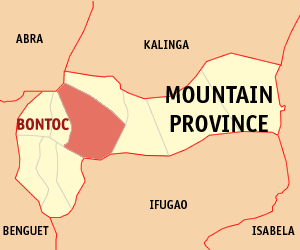
BONTOC. IFUGAO. KALINGA
As you can see, these 3 indigenous tribes reside fairly near each other. One must applaud them on not letting the Spanish affect their culture and traditions.

Bontoc, Philippines 1911
Its name derived from two morphemes - 'bun' (heap) 'tuk' (top) - Bontoc literally means 'mountains'. They reside in the Mountain Province which is in the Cordillera Administrative Region. All speak the language Bontoc though different villages within the area have different dialects; Sadanga, Guinaang, Bontoc.
One thing that changed however across all indigenous groups was headhunting. The Westerners outlawed headhunting in the 1900s. Before that, warriors of this tribe were very active in head hunting when confronting opposing warriors of other tribes. After a victorious battle, the enemy's decapitated head becomes their property. Only the head because the head is believed that the spirit would be at service of the owner which increases his power ads a warrior.
The owner preserves the head by;

IFUGAO
Ifugao man showing off his collection of skulls
Bontoc, Philippines 1911
Its name derived from two morphemes - 'bun' (heap) 'tuk' (top) - Bontoc literally means 'mountains'. They reside in the Mountain Province which is in the Cordillera Administrative Region. All speak the language Bontoc though different villages within the area have different dialects; Sadanga, Guinaang, Bontoc.
One thing that changed however across all indigenous groups was headhunting. The Westerners outlawed headhunting in the 1900s. Before that, warriors of this tribe were very active in head hunting when confronting opposing warriors of other tribes. After a victorious battle, the enemy's decapitated head becomes their property. Only the head because the head is believed that the spirit would be at service of the owner which increases his power ads a warrior.
The owner preserves the head by;
- boiling it in hot water to clean it,
- removing the lower jaw,
- burying it in a special room,
- for a year
IFUGAO
Ifugao man showing off his collection of skulls
The Ifugao generally just grow rice, beans, onions and gobi on their terraces as their form of livelihood. All would be able to understand Ifugaw Batad but the different dialects would be Hapao Ifugao, Hungduan Ifugao, Lagawe Ifugao, Ayangan Ifugao, Batad Ifugao and Ducligan Ifugao.
Headhunting for this indigenous tribe has an added ritual. For weapons, warriors lashed wooden boards together with rattan and used them as shields in batte. Upon returning victorious, they woul reenter the village carrying their steel headed lance ang shields in a parade-like formation; bent low to the groud and beating their shields with sticks of wood, swaying in sync. The Ifugao would bring home the decapitated enemy's head for decoration (see picture above). However the owner must take care to fasten the lower jaw in place to prevent it from dislodging.
On the other hand if an Ifugao warrior were to lose his head during a battle, said body of said warrior would be berated by his family for getting killed, as it is a disgrace.
These Ifugao however also have less violent hobbies. Native craft making. They enjoy carving dinnerware resembling humans so much so that their carved dinner spoons are brought during travels. This was also for social courtesy due to the high probability of hosts of poorer tribes not having additional spoons to spare the travellers.
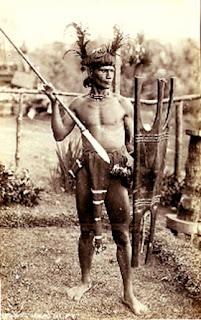
KALINGA
Warrior
Headhunting for this indigenous tribe has an added ritual. For weapons, warriors lashed wooden boards together with rattan and used them as shields in batte. Upon returning victorious, they woul reenter the village carrying their steel headed lance ang shields in a parade-like formation; bent low to the groud and beating their shields with sticks of wood, swaying in sync. The Ifugao would bring home the decapitated enemy's head for decoration (see picture above). However the owner must take care to fasten the lower jaw in place to prevent it from dislodging.
On the other hand if an Ifugao warrior were to lose his head during a battle, said body of said warrior would be berated by his family for getting killed, as it is a disgrace.
These Ifugao however also have less violent hobbies. Native craft making. They enjoy carving dinnerware resembling humans so much so that their carved dinner spoons are brought during travels. This was also for social courtesy due to the high probability of hosts of poorer tribes not having additional spoons to spare the travellers.

KALINGA
Warrior
In war, the Kalinga's choice of weaponary would be slender but deadly axes(below) and lances(above). When celebrating their victory, the hero of it would be given center stage to boast his preserverance.


ALIWA. KALASAG
AXE. SHIELD.
A marriage for the Kalinga's may be polygamus and not frowned upon. In fact it is expected. Hence in one family, there can be many wives. However having said that, there is always an elder, or a favourite wife, who does most of the decision making and household running.
To avoid a polygamous marriage however, the Kalinga's accept trial marriages whereby the couple's compatibility is tested.
ALIWA. KALASAG
AXE. SHIELD.
A marriage for the Kalinga's may be polygamus and not frowned upon. In fact it is expected. Hence in one family, there can be many wives. However having said that, there is always an elder, or a favourite wife, who does most of the decision making and household running.
To avoid a polygamous marriage however, the Kalinga's accept trial marriages whereby the couple's compatibility is tested.